
Stoves and incinerators that burn their own smoke
Patented stoves and waste incinerators for households, rural centres, mining sites and tourist camps.
- emissions reduction
- Up to 99%emissions reduction
- fuel saving
- 30–40%fuel saving
- countries patented
- 60+countries patented
From the problem to a working solution
Problem
Air pollution and household smoke
Solution
Clean-combustion stove
Fired correctly, it cuts smoke by 90–95% and fuel use by 30–40%.
DetailsProblem
Waste, open burning and local pollution
Problem
Heating and hot water for tourist camps and resorts
Solution
Low-pressure stove-boiler
One firing gives both heating and hot water, for far less up front than an electric or diesel boiler.
DetailsSolutions
An engineered solution for every scale
Twelve models, from a 12 kg travel stove to a trailer-mounted unit processing 12 tonnes an hour.
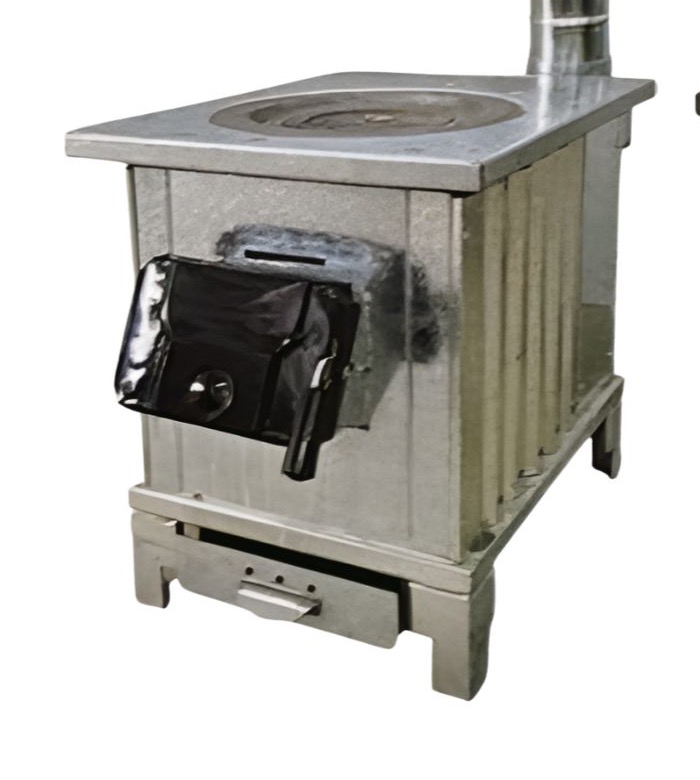
АЗ-73
Standard heating and cooking stove
- External dimensions
- 620 × 450 × 580 mm
- Weight
- 73 kg
- Type
- Mid-size, high output
Application
Heating and cooking
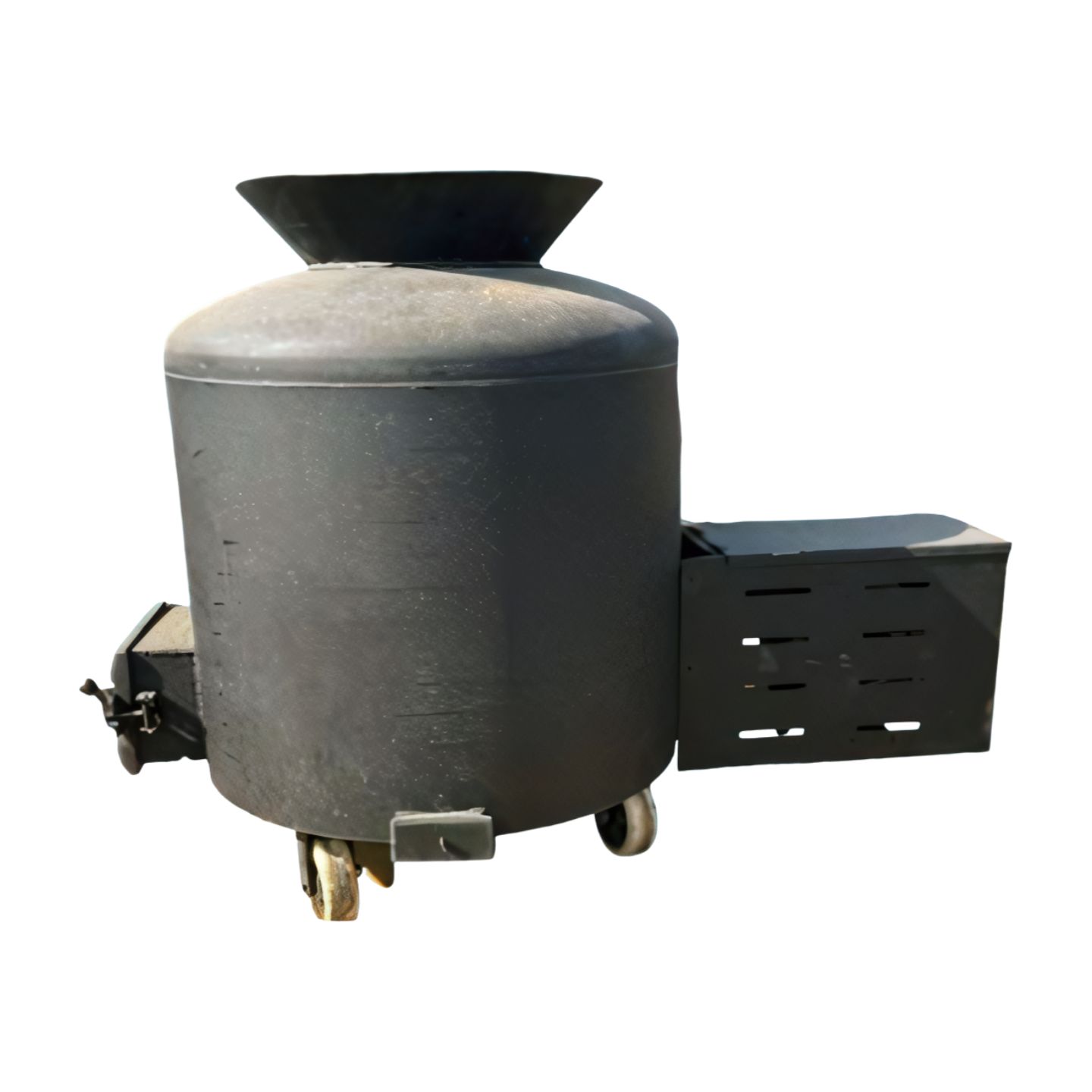
NCS-C700
Compact cylindrical waste processing unit
- Processing capacity
- ~700 kg/h
- External dimensions
- 1.50 m × 1.50 m
- Weight
- 920 kg
- Type
- Portable, small-format
Application
Household and small-site waste processing
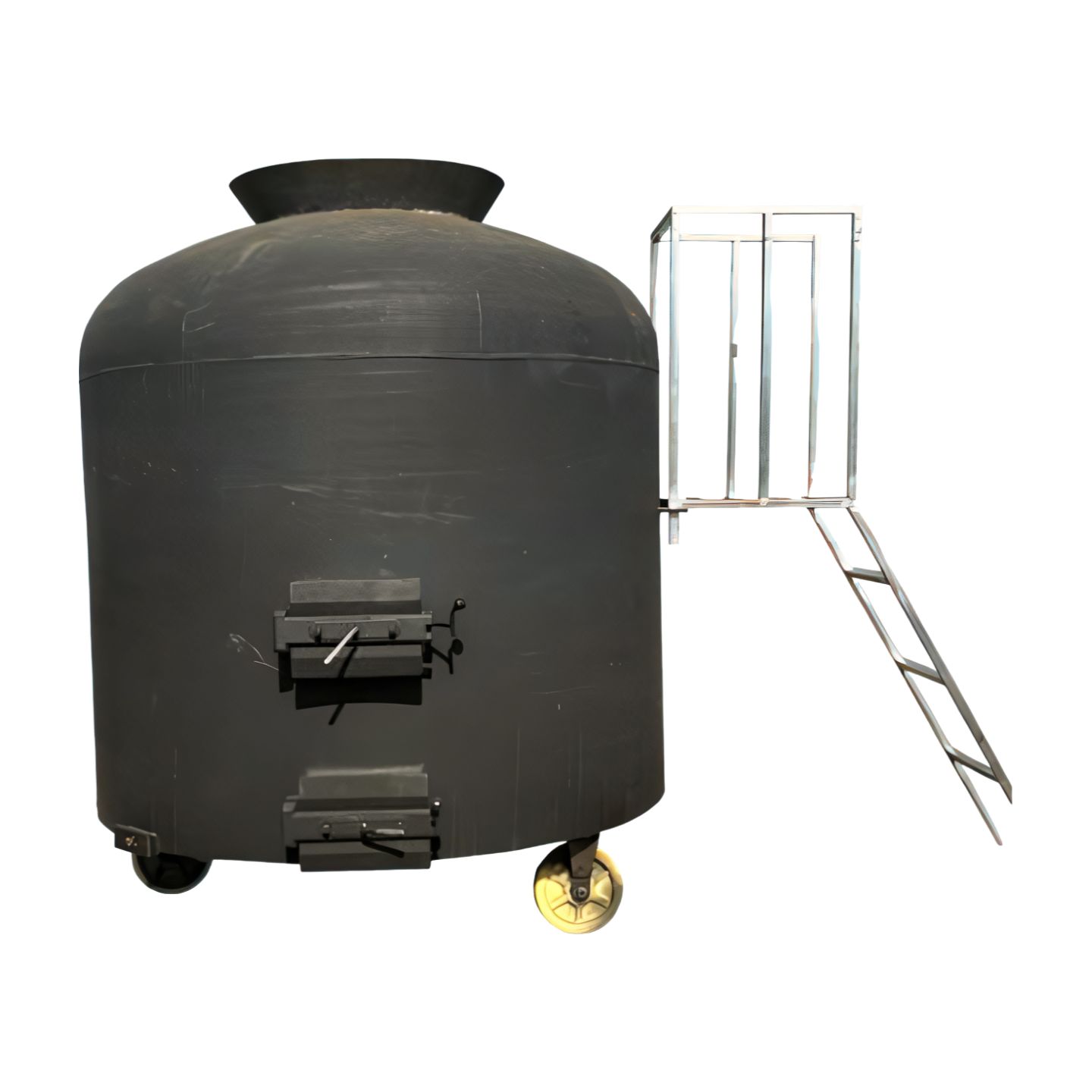
NCS-C4000
Cylindrical waste processing unit
- Processing capacity
- 4,000 kg/h
- External dimensions
- Ø2.0 m × 2.15 m
- Weight
- 1,990 kg
- Type
- Stationary
Application
Province, district and institutional-scale waste processing
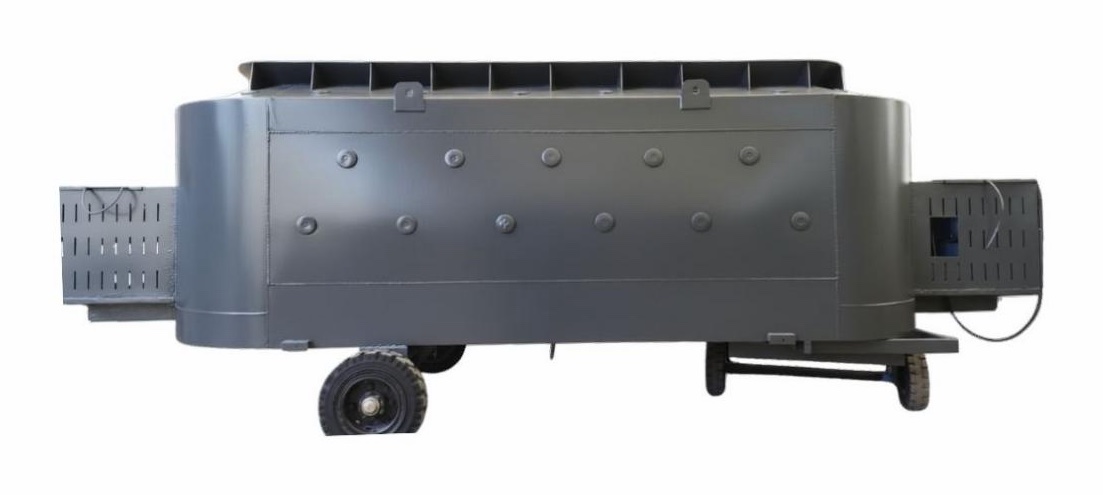
NCS-T12000
Modular trailer-mounted waste processing unit
- Processing capacity
- ~12,000 kg/h
- External dimensions
- 6.0 × 2.0 × 2.0 m
- Weight
- 6,200 kg
- Type
- Trailer-mounted, modular
Application
Urban, tourism and remote-area deployment
The Technology
The patented technology that re-burns its own smoke
Two-stage combustion with controlled airflow burns the exhaust gases and particulates a second time at high temperature, cutting smoke by up to 99%.
- 01
Primary air
A pressure differential sets up a swirling draught so the fuel burns evenly.
- 02
Secondary air
Combustion gases are mixed with secondary air, ready to burn a second time.
- 03
Re-combustion
In the patented second chamber the pollutants break down at high temperature.
- 04
Clean output
Smoke and toxic gas are neutralised, and the same fuel yields more heat.
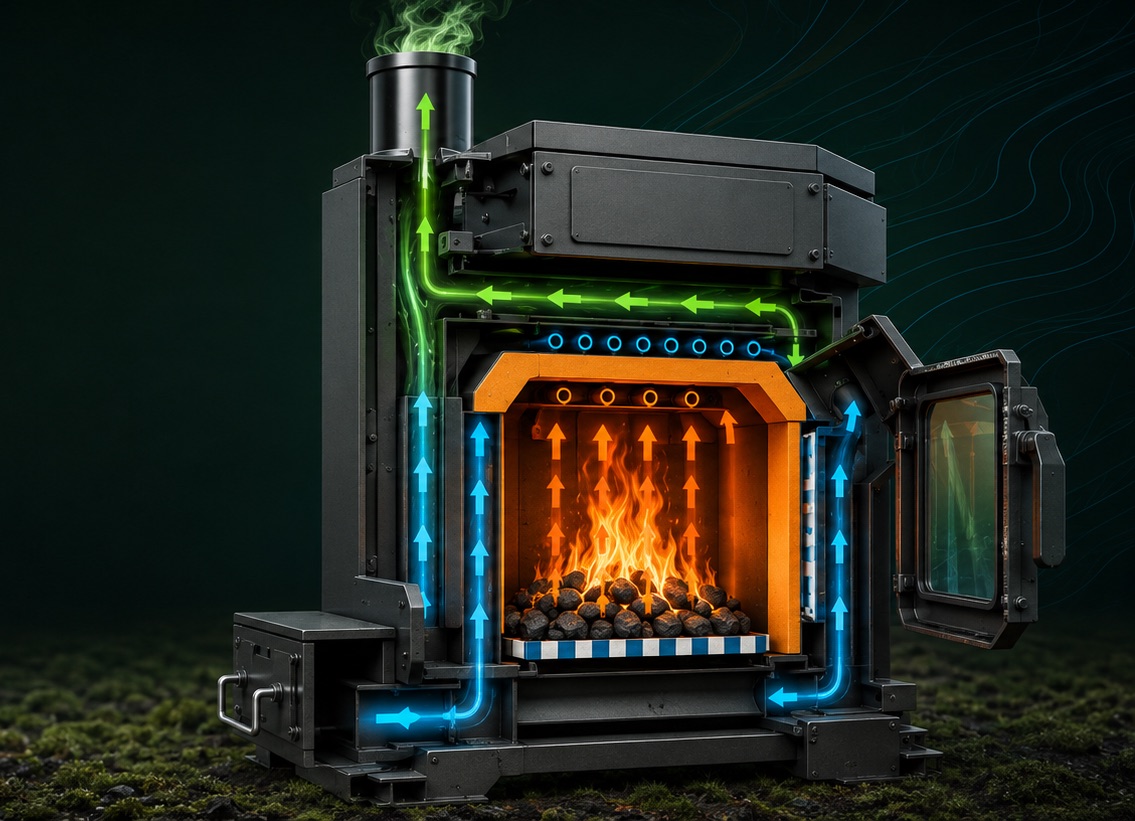
- Clean flue gas leaves the chimney
- Re-combustion chamber
- Secondary air injection nozzles
- Insulating heat jacket
- Primary air duct
- Ash box
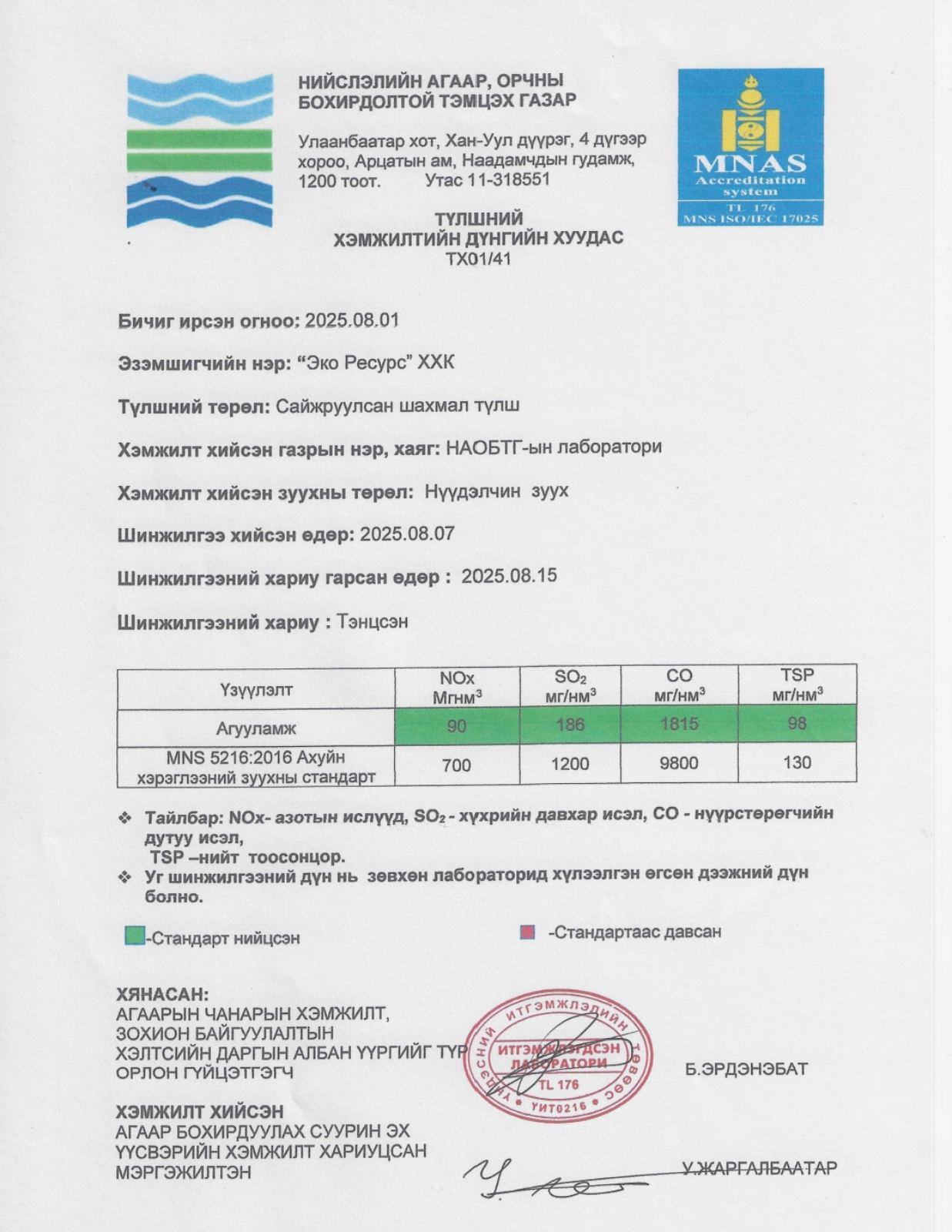
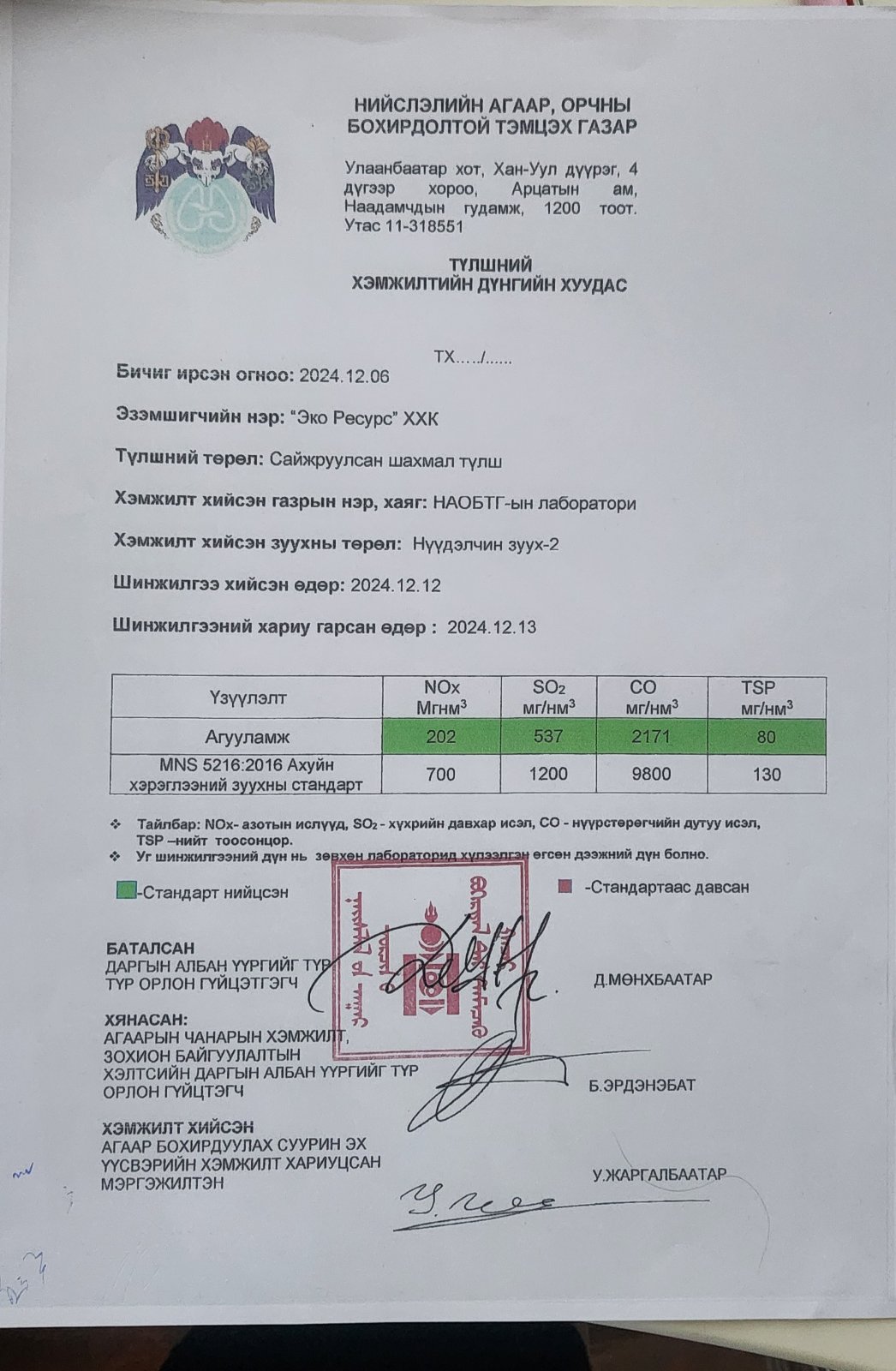
Emissions independently measured below the MNS 5216:2016 limits by NAOBTG and the Academy of Sciences. Heat transfer 85–90%; fuel savings 30–40% with correct use.
Independent Validation
Laboratory-verified performance
Emissions measured against MNS 5216:2016
| Pollutant | Our stove | Permissible maximum |
|---|---|---|
| COmg/nm³ | 1,815 | ≤ 9,800 |
| SO₂mg/nm³ | 186 | ≤ 1,200 |
| NOₓmg/nm³ | 90 | ≤ 700 |
| TSPmg/nm³ | 98 | ≤ 130 |
Source: accredited NAOBTG laboratory (sampled 2025.08.07, reported 2025.08.15). Laboratory accredited under MNAS · MNS ISO/IEC 17025 · TL 176.
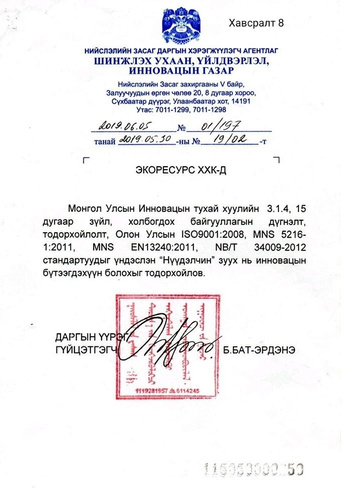
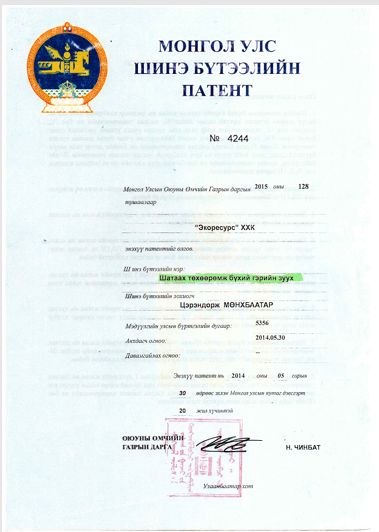
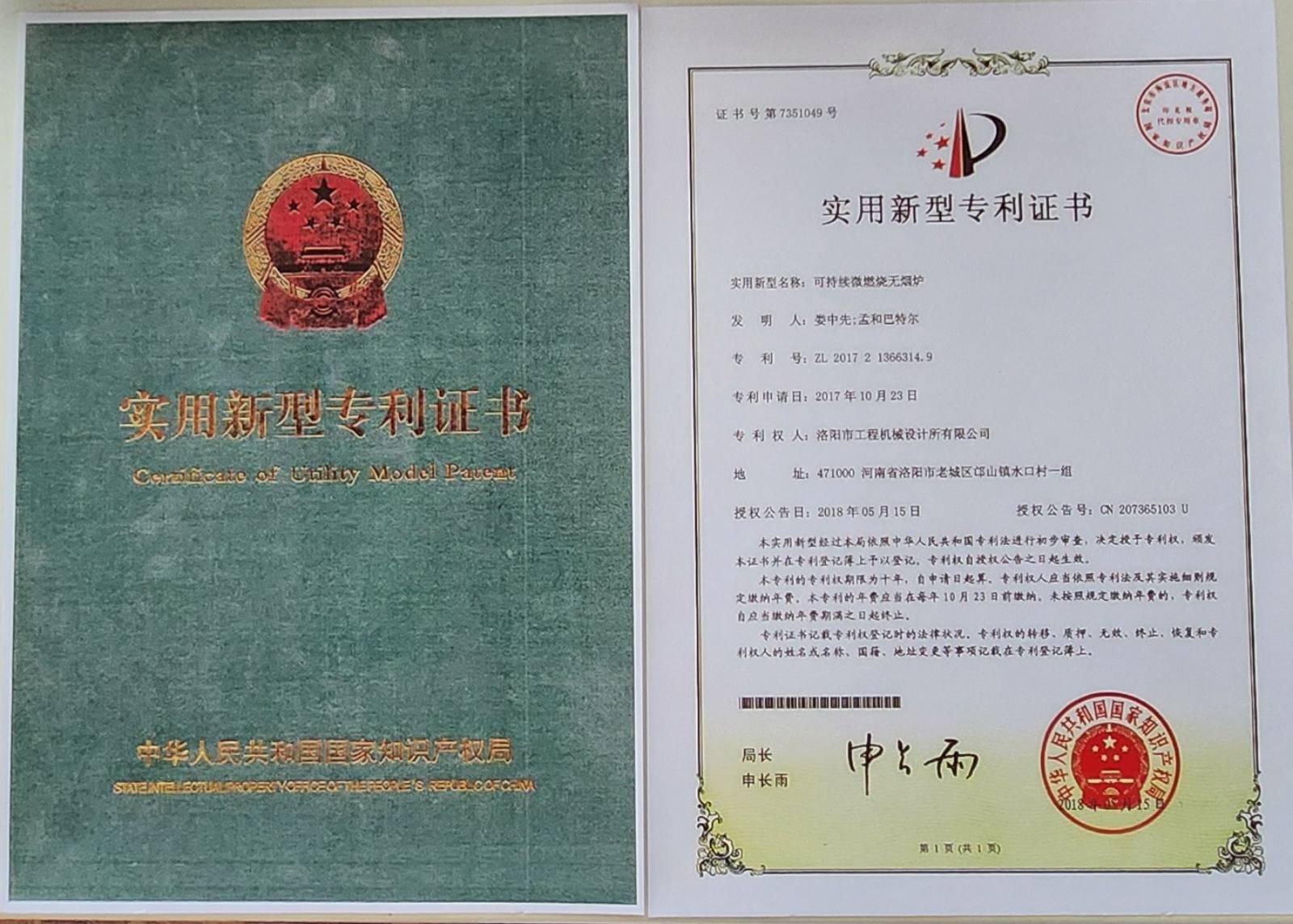
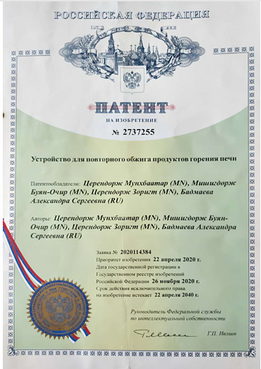
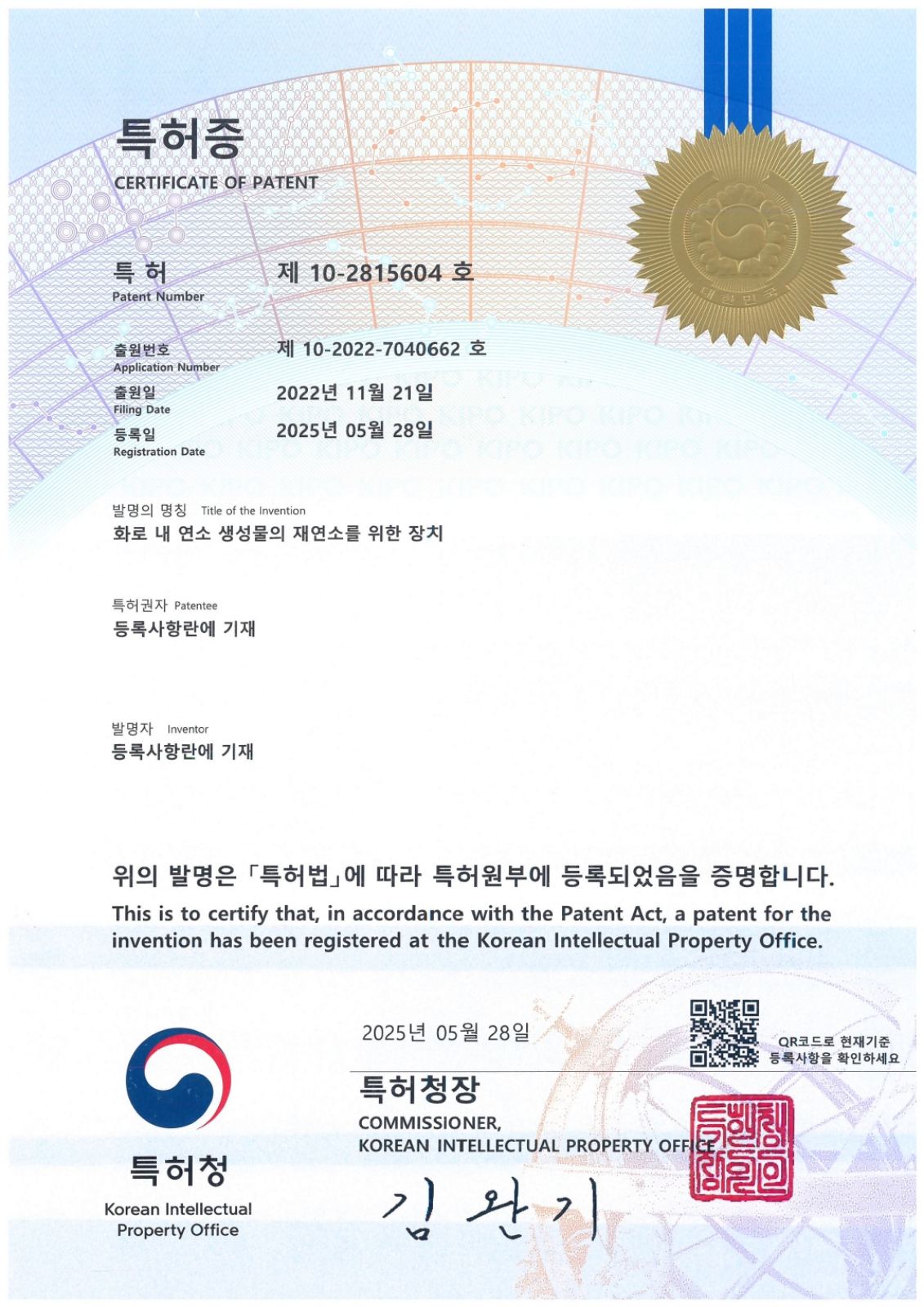
Patents and intellectual property
60+ countries
Granted or applied for
WIPO / PCT
International filing
National patent
Mongolia
Eurasian patent
Valid in 8 states
Countries covered
Let us size the right solution with you
We work out the right stove, capacity and running costs for your site, free of charge.
Open the full form